
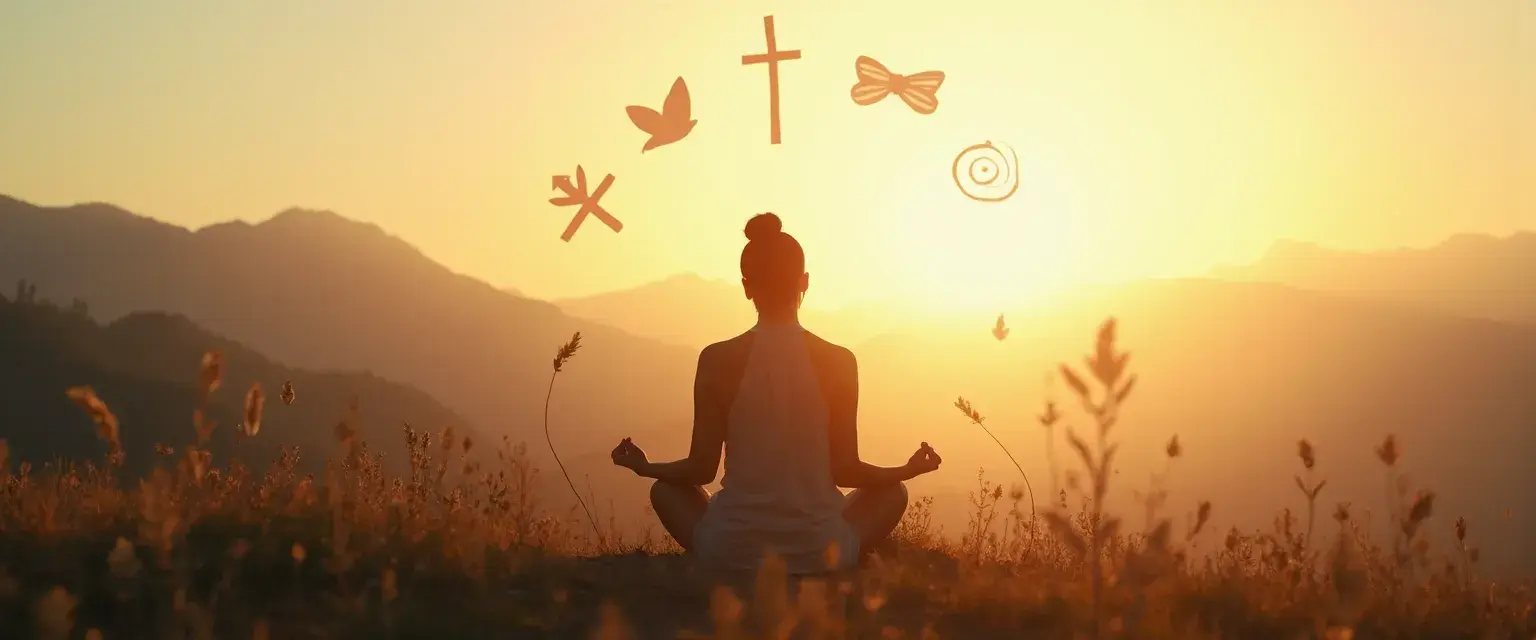
क्षेत्रक्षेत्रज्ञविभागयोगो नाम त्रयोदशोऽध्यायः ॥13॥
Introduction
Distinguishing between the body and the Self helps karmayoga:
The Gita, Vyasa is not inclined towards elaboration. Here he has only tersely stated, like Euclidean geometry, the principles useful for life. There are no long discussions in the Gita; brevity is its distinctive characteristic. It is so mainly because everybody can test for himself the veracity of the Gita‘s teaching in his life; and it is meant to be so tested. The Gita tells only those things which are useful for life.
Our main reason in studying the Gita is to get help and guidance in life whenever we need it. Such help is always forthcoming. The Gita is a treatise that tells us how life is to be lived.
One who performs swadharma should give up the fruit of actions : it is the main thing that is emphasized everywhere in the Gita. One must act, but one must also renounce the fruit; one must water a plant and tend it with care, but should not expect for himself any return therefrom in the form of its shade, fruit or flower. This is what karmayoga in the form of performance of swadharma means.
It may be easy to say or even understand, but difficult to put into practice, that one should perform swadharma properly—not just any sort of karma—and renounce the fruit, as desire for fruit is considered to be the incentive for action. Action without desire for the fruit for oneself is against the prevalent current; it is diametrically opposite to what normally goes on in the world.
You can hardly find a single karmayogi of the Gita’s definition among the millions who work; he is rare even among the millions who perform swadharma. In fact, judging by the true and subtle meaning of karmayoga, a perfect karmayogi can hardly be found. To work and then to renounce its fruit is something most unusual.
Another complementary point has been put forth in the Thirteenth Chapter. It is the distinction between the body and the Self.
To know a thing fully we have to enter into its interior. We have to peel off the skin of a fruit to taste the pulp within.A jackfruit too has a rough exterior but inside there is sweet and juicy pulp. We need to distinguish between the outer and the inner while looking at ourselves as well as at others. The outer cover is to be set aside. What does it mean? It means that we should make a distinction between the outwardly visible form of anything and its inner essence. Everything has an outer body and an inner soul; just as we have a physical body outside and the soul or the Self within.
This is true about karma as well. The fruit of the karma is like its outer body which should be discarded, and the purification of mind that results from it is its soul which should be cherished. We should inculcate the habit of making this distinction; we should acquire this penetrating insight. We should train and discipline the eyes, the mind and the reason through constant practice to achieve this purpose. Everywhere we should leave aside the body and adore the Self. The Thirteenth Chapter has explained this distinction for us to reflect on it.
The basic foundation of betterment
Nowadays, bad education is imparting extremely evil samskaras. This education does not lift us out of our total identification with the body.We are doing everything to pamper the body.The body is thus being vainly worshiped; there is no awareness of the bliss that lies in the experience of the Self. This condition has resulted from the present system of education. Day and night, indulgence of the body is being continually and insistently taught.
There is nothing wrong in being aware of the defects in the body and the mind. It helps in removing them. But one must understand clearly that one is not the body. My ‘Self’ is altogether distinct from the body. It is wholly beautiful, faultless, pure, sublime and holy.
There can be improvement only when it is realized that the body is but an instrument given to us.It is like an agricultural implement, an implement to cultivate the Lord’s field. If it is impaired, it should be repaired.
The body is here as a means. I should strive to purge myself of defects and faults by detaching myself from the body. I am distinct from the body, which is an instrument. I am the master, the owner of the body. I am the one who gets good work done by the body. Such a discerning attitude should be inculcated by us.
Attachment to the body wastes life :
Man is always striving to somehow prolong the life of the body even after it has become old and decrepit. But how long can this body, this shell be sustained? At most until death; not a moment longer. All the vanity is reduced to naught when death stares one in the face. Still man continues to produce various things for this worthless body; he ceaselessly worries about it. Nowadays, some people find no harm in meat-eating to sustain the body. In their view, human body is so precious that one may eat flesh without compunction to sustain it; animals’ bodies, on the other hand, have little value. But what, after all, is the ground for this opinion? The only ground could be that animals eat anything and think nothing beyond themselves while human beings take care of the creation around them. This very basis for considering human beings superior is undermined by meat-eating. Human beings are superior because they exercise self-control, because they care for other creatures. Man is superior because of this quality that is not found in animals. That is why it is said to be a rare gift to be born as a human being. How can man be considered superior, if he undermines the very basis of his superiority? When man begins to eat flesh like other animals without any qualms, he undermines the foundation of his superiority. It is like cutting the branch of a tree on which one is sitting.
The body is an instrument at our disposal and we should certainly do whatever is necessary to keep it in order.
To sum up, the body is a means and not an end. Once this is deeply realised, man will not make much ado about nothing. Life will then appear markedly different. Man would not then revel in decorating the body.
You should be concerned about making the mind and the heart pure and beautiful, about developing the intellect.
‘You are That’:
Therefore, the idea that the Lord is putting forth in the Thirteenth Chapter is extremely valuable : ‘You are not the body, you are the Self’ (Tat tvam asi). This thought, this saying is most noble, sublime and holy. We find this idea everywhere in Sanskrit literature : ‘You are not the outer cover; you are the pure, indestructible kernel within.’ The moment a man realizes that he is That—the Supreme Self— and not the body, a new kind of joy that has never been experienced before will surge up in the mind. Nothing in the world can destroy, nothing is capable of destroying the Self. This subtle thought is implied in this saying.
I am the Self—the imperishable, unsullied element transcending the body.The body is needed for work. When it becomes useless for the purpose, I would not hesitate to throw it away.
Faith in the power of the Supreme Self:
To sum up, as long as there is attachment to the body, as long as there is fear, a sense of insecurity would continue to haunt you.Who protects you when you are asleep?
We go to sleep trusting some power; the same power which all the animals trust when they sleep. Even a tiger goes to sleep.
We too go to sleep in the lap of that all-pervading power, relying on which savage tigers, lions and wolves also sleep. A child sleeps in his mother’s lap happily and confidently. At that time the child is, as it were, the master of the world. We too must learn to sleep in the lap of the Lord, the all-sustaining Mother, with love and trust and the knowledge that we are safe there. We should make ourselves more and more familiar with the power which sustains the whole of our life. We should feel the presence of that power more and more. The more we are convinced of its presence, the more we shall be secure. The more we feel the presence of that power, the more we shall grow. The Thirteenth Chapter gives some indication of the steps needed to be taken in this direction.
Progressive realization of the Supreme Self: Witness,Permitter,Supporter,Experiencer (उपद्रष्टा ,अनुमन्ता ,भर्ता आणि भोक्ता)
Man is absorbed in ordinary worldly activities as long as there is no thought of the Self within the body. He knows little else than eating when hungry, drinking when thirsty, sleeping when drowsy.The Self only watches all this. It stands silently like a mother keeping a watchful eye on her child crawling towards the well. It just looks at all the activities silently. This state has been described as that of a Witness.
The Self watches, but does not give its assent to what is being done. The jiva (individual soul), which has till now been acting under the impression that it is nothing but the body, then wakes up. The realization dawns that it has been living like an animal. When the jiva comes to this point, the realm of ethics begins. Then the question whether something is right or wrong, moral or immoral crops up at every step. At this stage, man starts exercising rational discrimination. His analytical mind starts working. Impulsive actions cease. Self-restraint takes the place of self-indulgence.
When the jiva ascends to this moral plane, the Self no longer remains a silent spectator. It gives its approval from within. A voice is heard from within : ‘Well done!’ The Self now no longer remains a mere witness. It gives its assent; it upholds the jiva’s actions and expresses appreciation.This we can say stage permitter.
Then comes the next stage. Man tries to cleanse his mind in the course of doing duties while living a moral life. He strives hard, but gets exhausted at some point. The jiva then prays to the Lord, “Oh Lord! I have come to the end of my tether. Give me more strength.” Until a man realizes that he cannot succeed by his own efforts, however hard, the true significance of prayer does not dawn on him. One should first exhaust all his strength and when it is found insufficient, cry earnestly for the Lord’s help, as Draupadi did. The eternal spring of the Lord’s grace and compassion is ever-flowing. Whosoever is thirsty can come to it and quench his or her thirst as a matter of right. Whosoever lacks anything can ask for it. Such is the relationship in this third stage,the supporter. The Lord has now come closer. He not only expresses His approval by words, but also rushes to help.Whenever the bhakta begins to lose heart, He is there ready to help. The sun-god is ever waiting at your door. But he would not forcibly open the door and barge into the room; he would not even knock the door. His job is to serve and he behaves accordingly. But the moment you open the door, he will come in with all his rays and dispel darkness. The Lord acts likewise. The moment you call Him for help, He will rush to you with outstretched arms.He will rush to help His devotees, to provide whatever they lack. That is how He helped Rohidas in tanning leather, Sajan the butcher in selling meat, Kabir in weaving cloth, Janabai in grinding corn.
A bhakta also offers to the Lord the fruit of his actions readily and instantaneously. The Lord who appeared as the Witness, the Permitter and the Supporter, now becomes the Experiencer. The jiva now ascends to a stage wherein the Supreme Lord Himself, present within the body, becomes the enjoyer of the fruit.
Hereafter, making resolves (sankalp) should also be given up. Let me entrust to Him all the responsibility for all the resolves of my mind. When I am riding a horse, making it carry all my weight, what is the point in carrying the baggage on my head? Let that burden also be placed on horseback as, anyway, the horse is going to bear all the weight even if I keep the load on my head. Thus the Lord eventually becomes one who moves my life and makes it blossom. My life is then completely in His hands and He does with it what He likes. He thus becomes ‘Maheshwar’ (the Supreme Lord) who holds the reins of my life. Progressing in this way, the whole life becomes saturated with His presence. Only the curtain of the body then separates me from Him. When that is removed, jiva and Shiva (God), atman and paramatman (Self and the Supreme Self) become one.
And finally, we should surrender to Him the right to make resolves, and let our whole life be suffused with Him. This is man’s ultimate goal. A seeker is to reach this goal soaring on the two wings of karma yoga and bhakti yoga.
Basic means for knowledge : freedom from pride, deceit etc.:
To achieve all this, the firm foundation of moral sadhana is a sine qua non. We should discern between truth and untruth and follow truth. We should discern between the essential and the non-essential and stick to the essential. We should throw away the shell and keep the pearl.
Without the power to discern between truth and untruth, we cannot distinguish between the body and the Self. This discrimination, this knowledge should become a part of our being. We associate jnana (knowledge) with knowing, but knowing through reason only does not lead to true knowledge.
Eating does not just mean stuffing the mouth with food. Food should be properly chewed and it should get digested and converted into blood which would then run through the veins. Only then the action of eating is complete in the true sense. Likewise, intellectual understanding is not enough; knowledge should be fully assimilated; it should become a part of our being and should get reflected through every action of ours.
The Lord has therefore given a beautiful definition of knowledge (Jnana) in this Chapter. The attributes of knowledge are similar to those of sthitaprajna. The Lord has enumerated twenty attributes including humility, non-deceitfulness, non-violence, uprightness and forgiveness(‘नम्रता ,दंभ–शून्यत्व,अहिंसा,ऋजुता,क्षमा ). There are only 5 verses ( 7 to 11) in this Thirteenth Chapter describing these 20 attributes of Jnana.We should understand them and incorporate those in our practice.
The essence of this is that all of us should go on rising higher and higher, dissociating the body from the Self and trying to make life divine, to fill our being with God.
Key Learnings
- Body is temporary, soul is eternal
- Awareness leads to liberation
- Ego comes from identifying with the body
- True knowledge is inner transformation
- God is present in all beings
Conclusion
Kshetra Kshetrajna Vibhaga Yoga helps us understand who we truly are.
By realizing the difference between the body and the soul, we move toward self-realization and freedom from suffering.